
Patterns of Time: The Fusion of Hong Kong's Poetic Spirit and Fashion
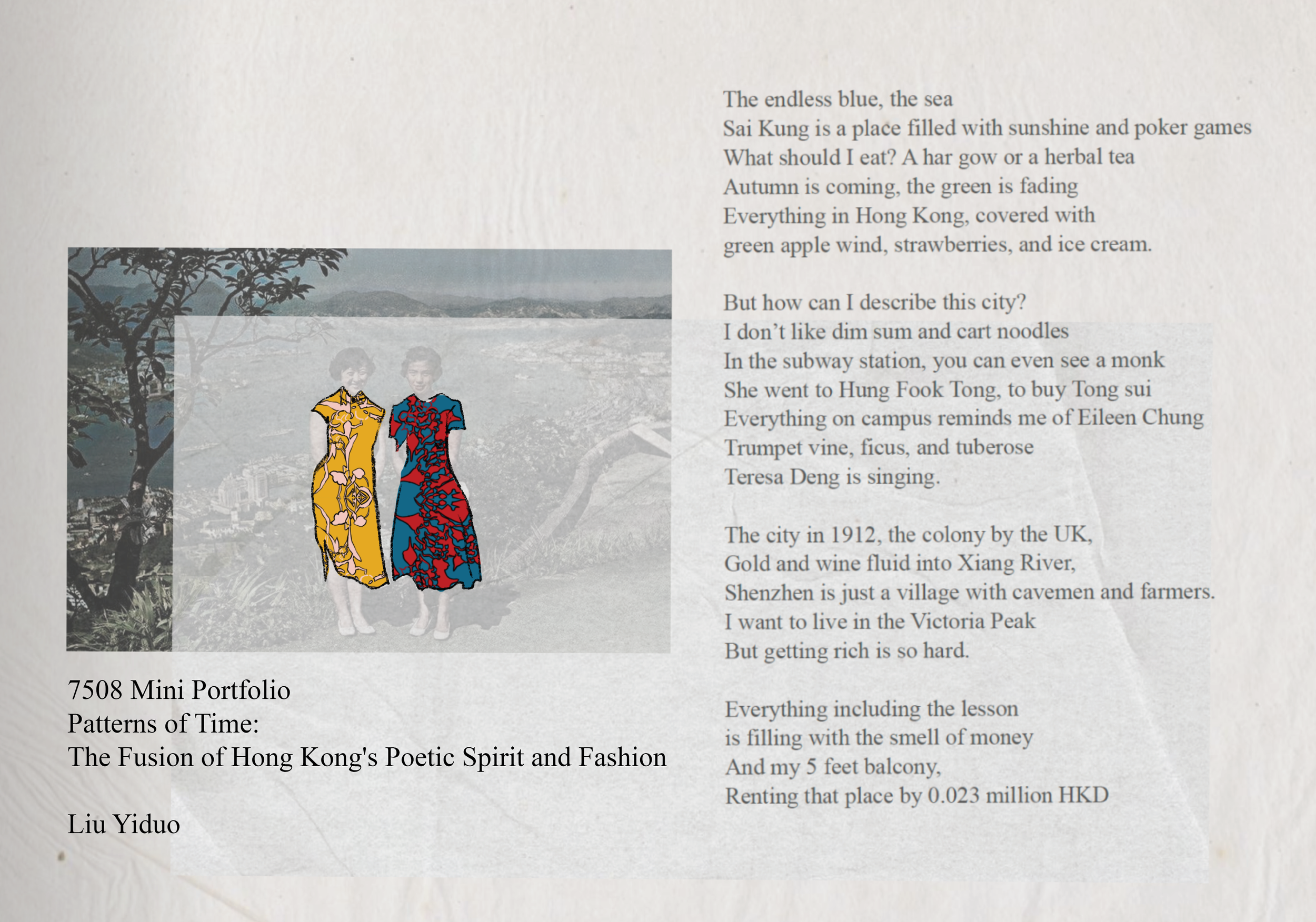
I have always been deeply fascinated by the culture and distinctive charm of Hong Kong. Despite being from Northern China, my childhood was filled with TVB dramas and Cantonese songs, which brought Hong Kong’s vibrant cultural spirit into my life and left a lasting impression. For my third-week assignment on Hong Kong literature, I chose to approach this theme through poetry, transforming it into a pattern design portfolio. My goal was to honor this era and capture my interpretation of Hong Kong’s unique identity and atmosphere.
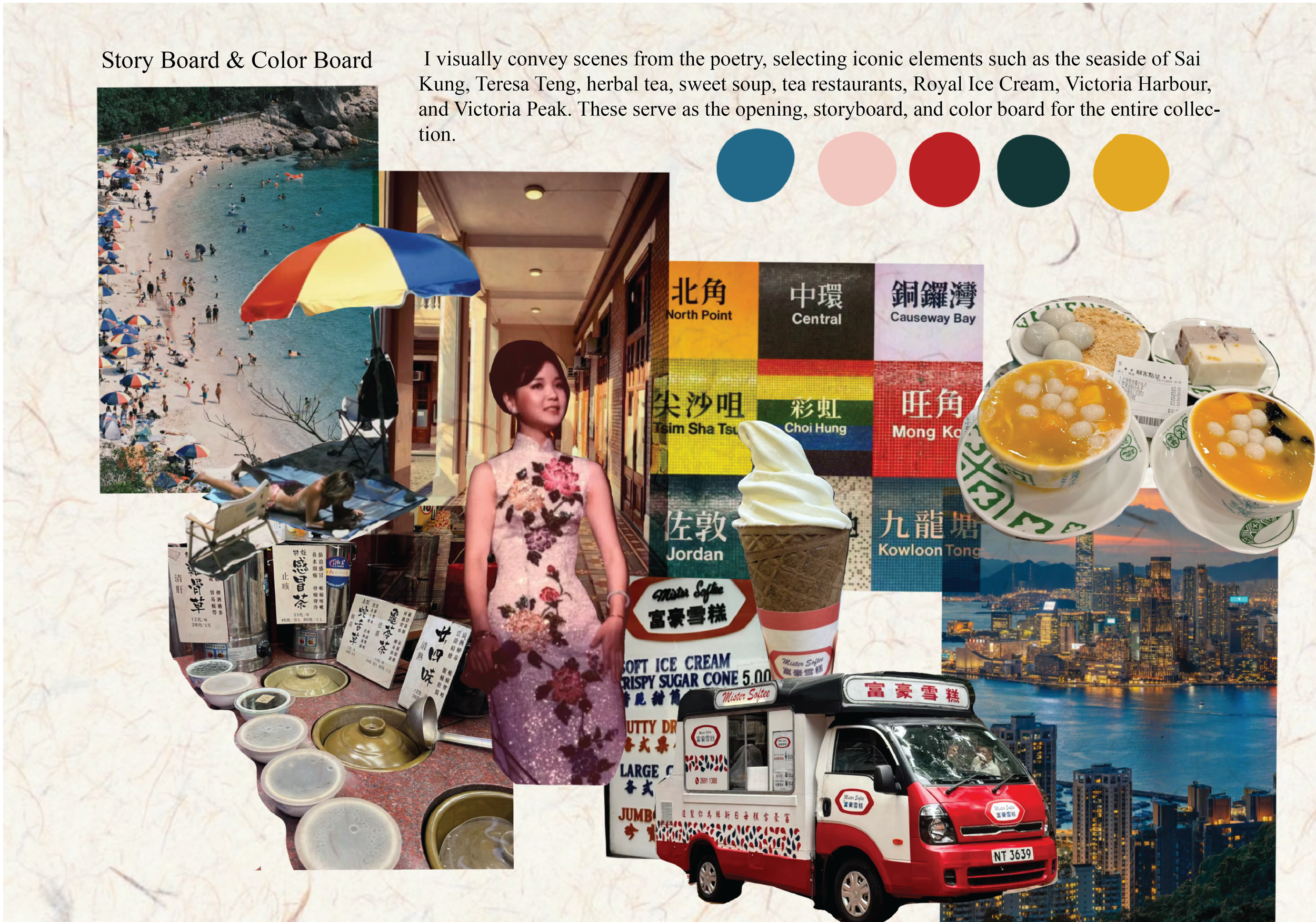
To bring this vision to life, I began with a collage that visually expresses memorable scenes from the poem, translating words into vivid visuals. I selected iconic elements of Hong Kong’s everyday life: the Sai Kung seaside, Teresa Teng’s timeless music, herbal tea, traditional sweet soups (糖水), bustling cha chaan tengs (local cafés), Regal ice cream, the sparkling Victoria Harbour, and the view from Victoria Peak. Each element conveys a distinct aspect of Hong Kong culture and atmosphere, setting the foundation for my portfolio’s opening. This collage acts as the storyboard and color board for my project, establishing a visual language that combines nostalgia with vibrancy, which is quintessentially Hong Kong. I chose pale yellow, deep red, emerald green, and sea blue as my color palette. On one hand, these colors are closely related to the hues of Hong Kong's cityscape. On the other hand, they are vibrant and bright, giving a sense of energy and diversity, much like the feeling that Hong Kong itself evokes.
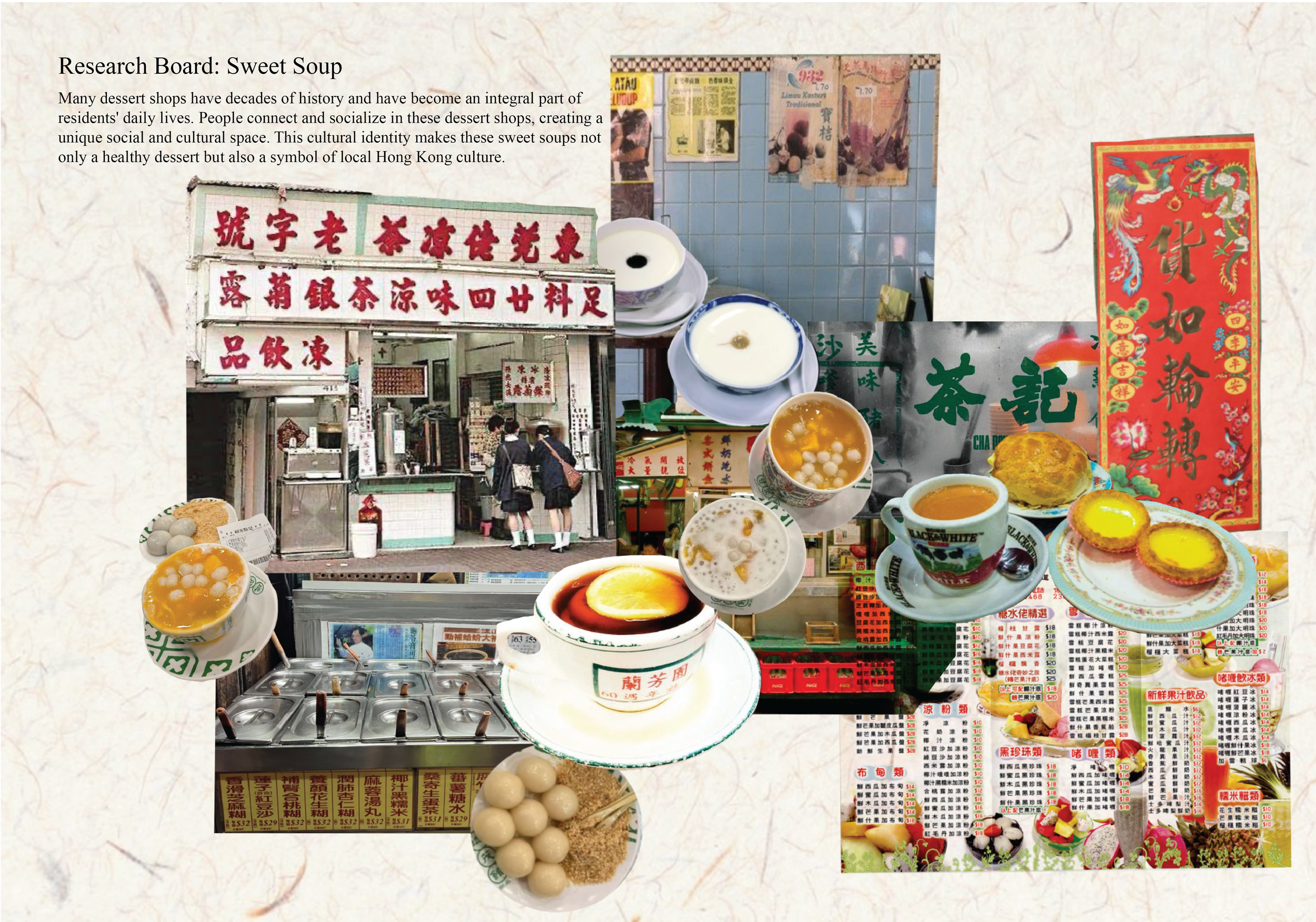
To add depth to the mini-portfolio, I conducted a detailed exploration of Hong Kong’s cityscape and cultural elements, focusing on key symbols. The first is the tradition of sweet soup. In Hong Kong, sweet soup shops are not merely dessert venues; they are community spaces where people gather, socialize, and reinforce local bonds. Many of these shops have existed for decades, transforming from simple eateries to symbols of local identity. The cultural value of sweet soup is not just in its taste but in its role as a community hub, where people connect and share stories. This aligns with the “curatorial poetics” described by Antony Huen and Felix Chow, in which poets and artists use everyday objects to convey complex layers of cultural memory, enriching the local identity and reflecting the social landscape of Hong Kong (Huen and Chow 45). Therefore, the first collage is a combination of a dessert shop and sweet soup. On one hand, it echoes the sweet soup mentioned in the poem, while on the other hand, it carries a deeper cultural significance. I hope this collage will allow people to visualize what Hong Kong's culture looks like when expressed visually.
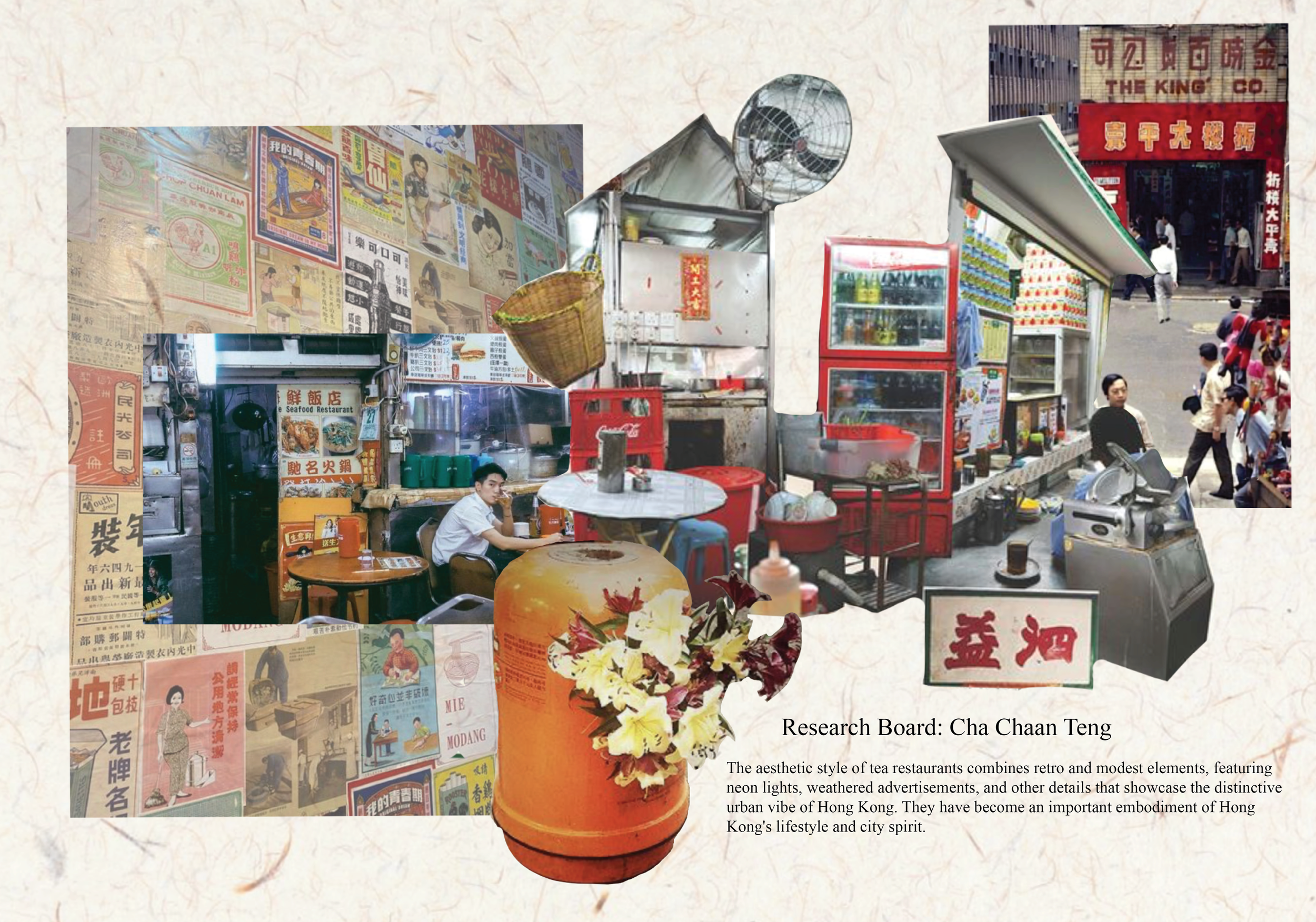
The second significant element in my project was the Cha chaan tengs and the tabloid culture. Cha chaan tengs are far more than dining spaces; they capture the essence of daily life and the collective memory of Hong Kong residents. These cafés offer affordable fusion cuisine combining Western and Chinese influences, catering to people across social classes. The aesthetic of a typical cha chaan teng—a mix of retro and humble design, with neon lights, worn-down menus, and vibrant posters—illustrates the authentic grassroots vibe of Hong Kong. This imagery embodies Hong Kong’s cultural spirit and emotional depth. I hope that the sweet water shops and cha chaan tengs can provide the audience with an immersive experience of Hong Kong's cultural spirit. Through a visual approach, I aim to analyze the elements in the poem I’ve written and use these elements to create works that reflect the characteristics of the poem.
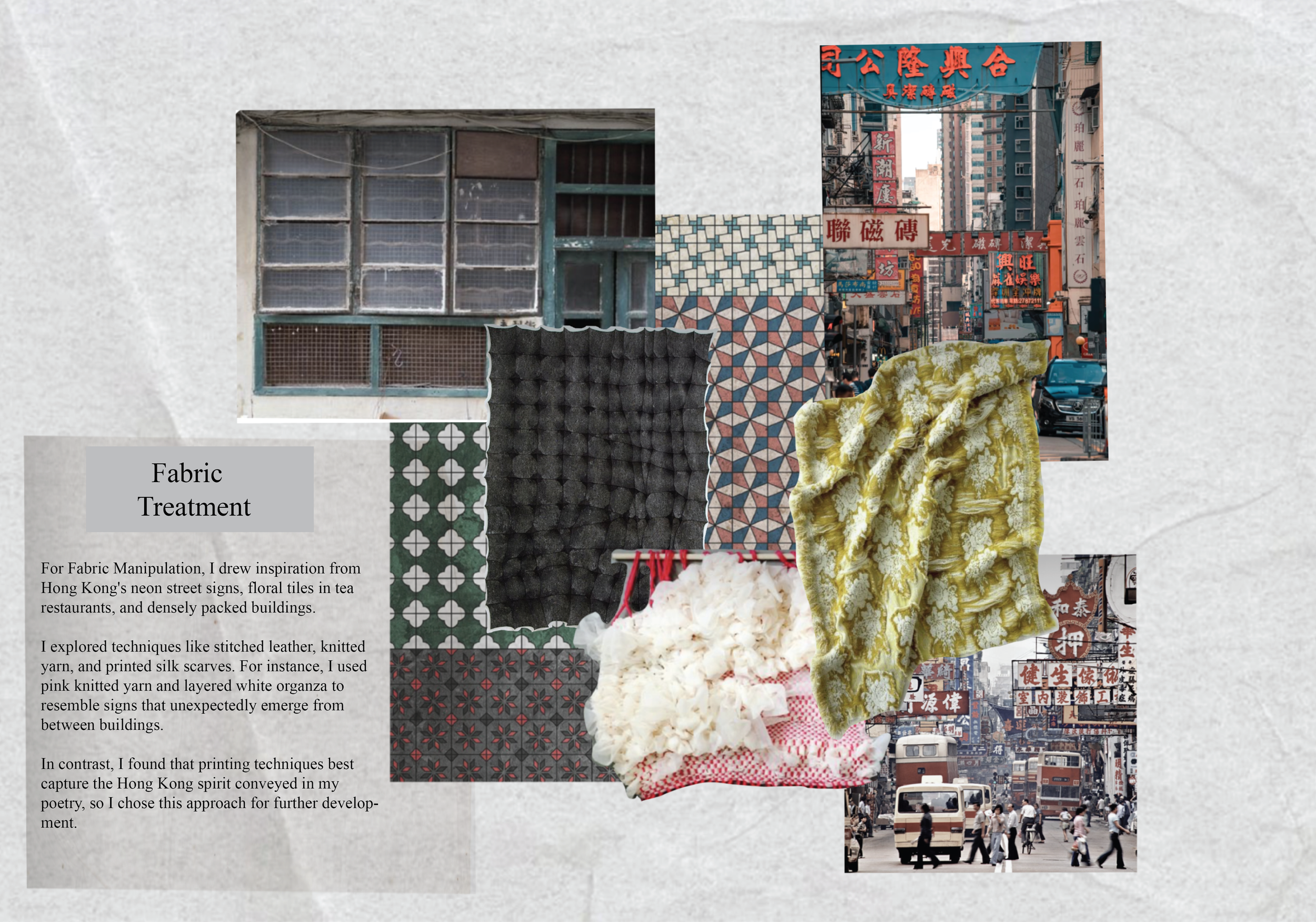
For fabric manipulation, I drew inspiration from Hong Kong’s neon signs, the intricate floral tiles in cha chaan tengs, and the densely packed high-rise buildings. I experimented with various techniques, including leather stitching, yarn knitting, and printed patterns. In the fabric manipulation collage, I combined pink knitted yarn and layered white organza to evoke neon signs unexpectedly appearing amidst Hong Kong’s urban landscape. Through these trials, I realized that printed patterns could most effectively capture the visual complexity of Hong Kong as portrayed in the poem. On one hand, printed patterns have more vibrant colors, and on the other hand, the textures of 3D and knitted fabrics are somewhat too complex, making it difficult to highlight Hong Kong's free-spirited and laid-back vibe. Additionally, since Hong Kong is located in the tropics, knitted fabrics don't quite align with the city's overall tone.
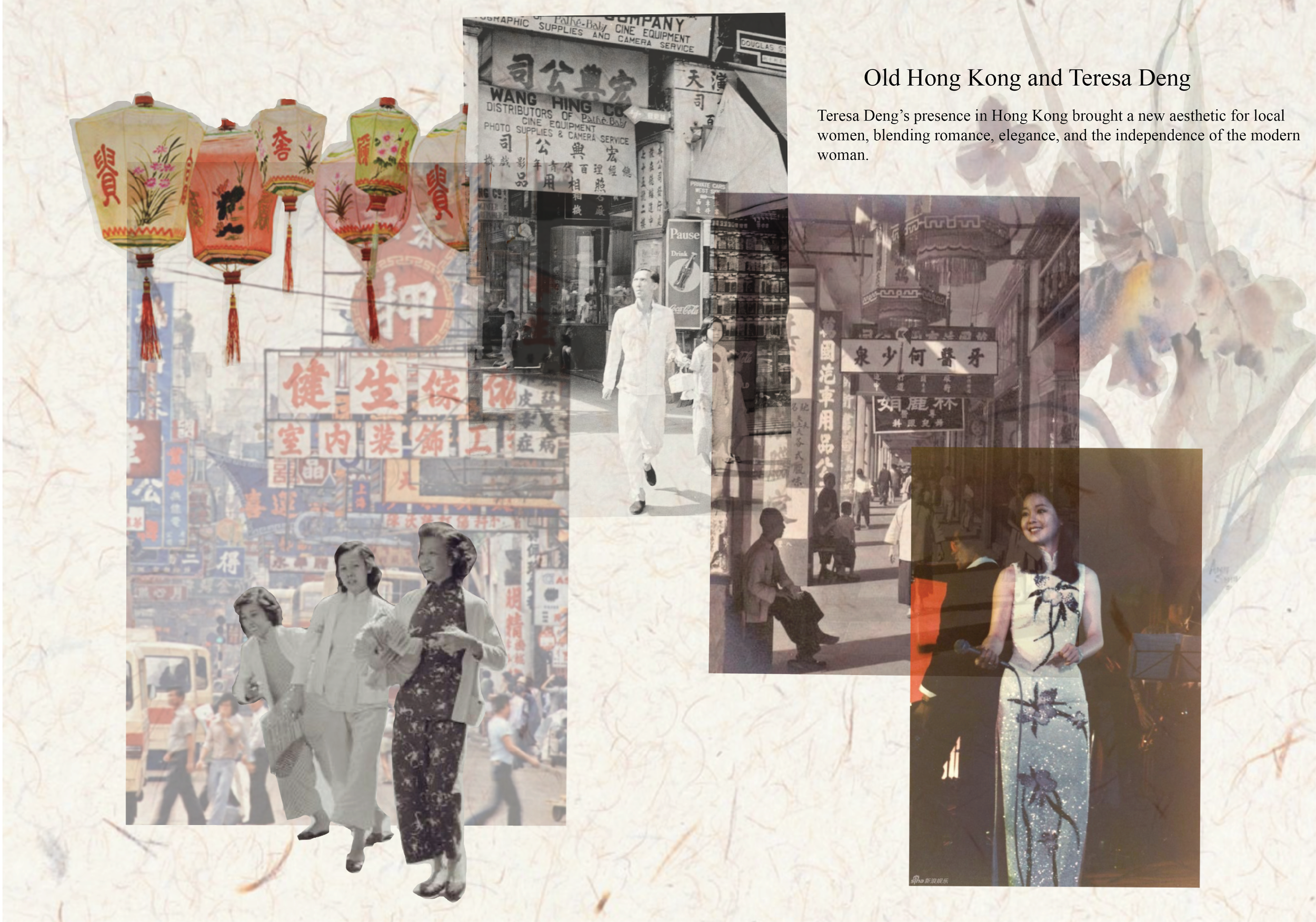
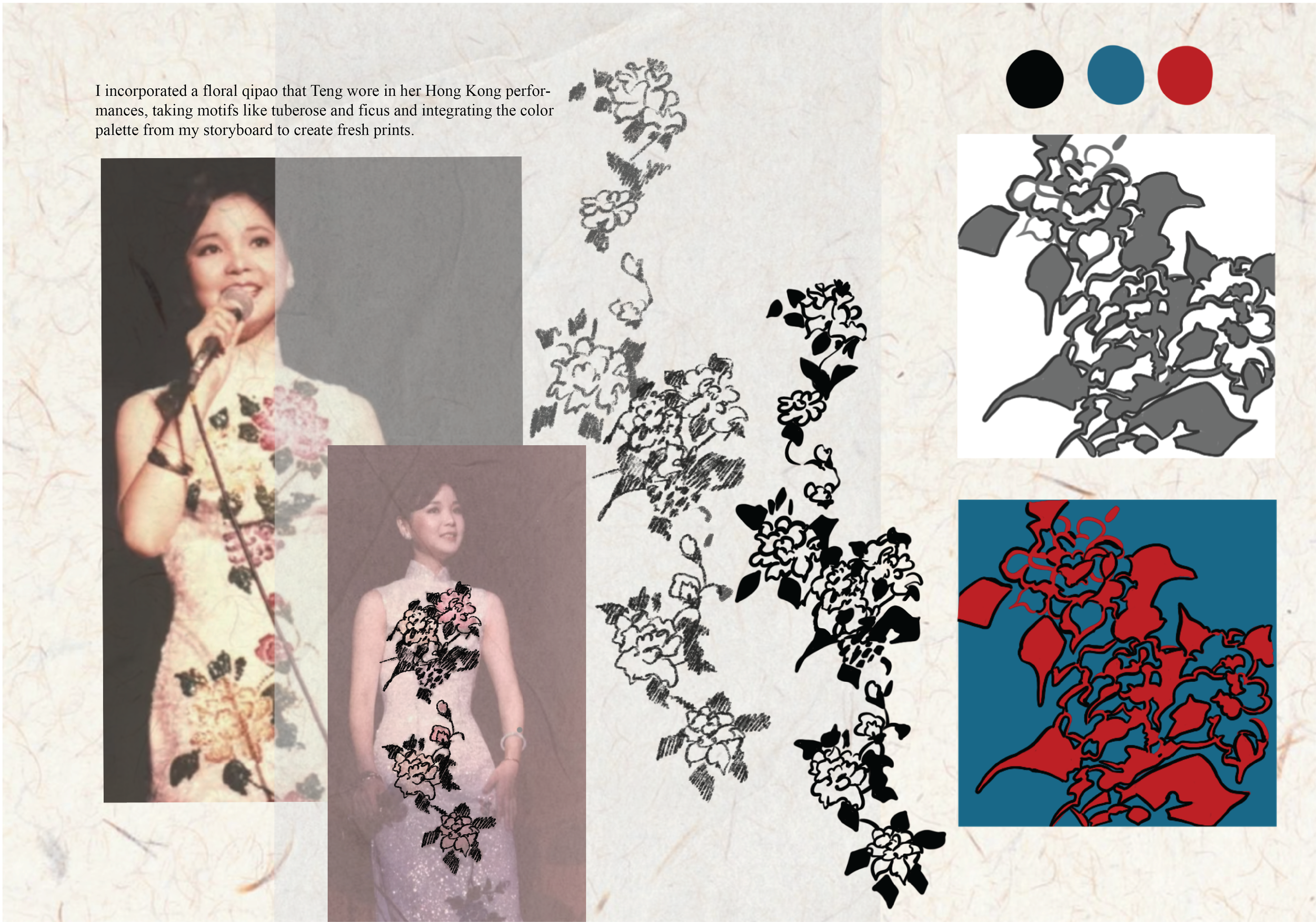
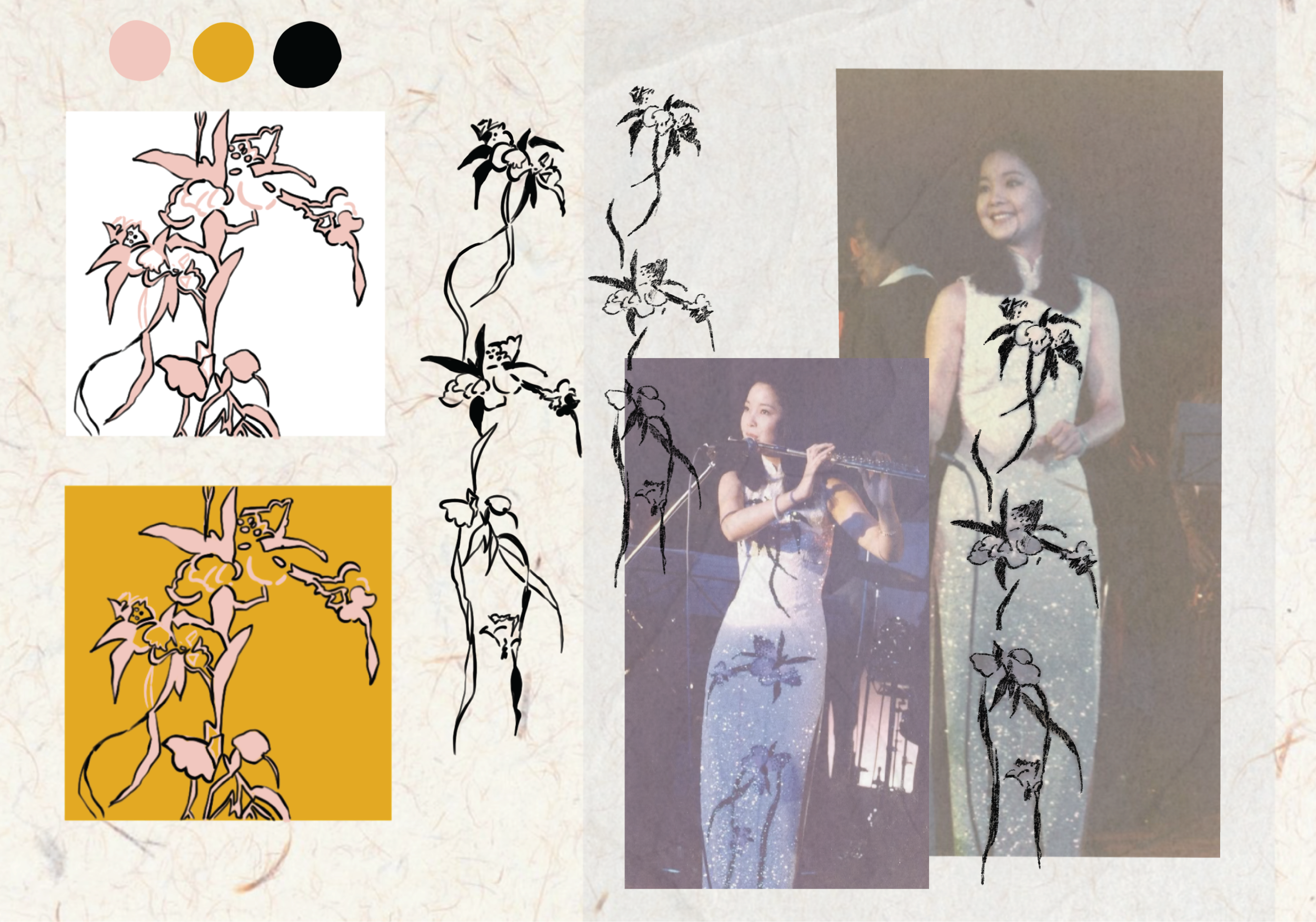
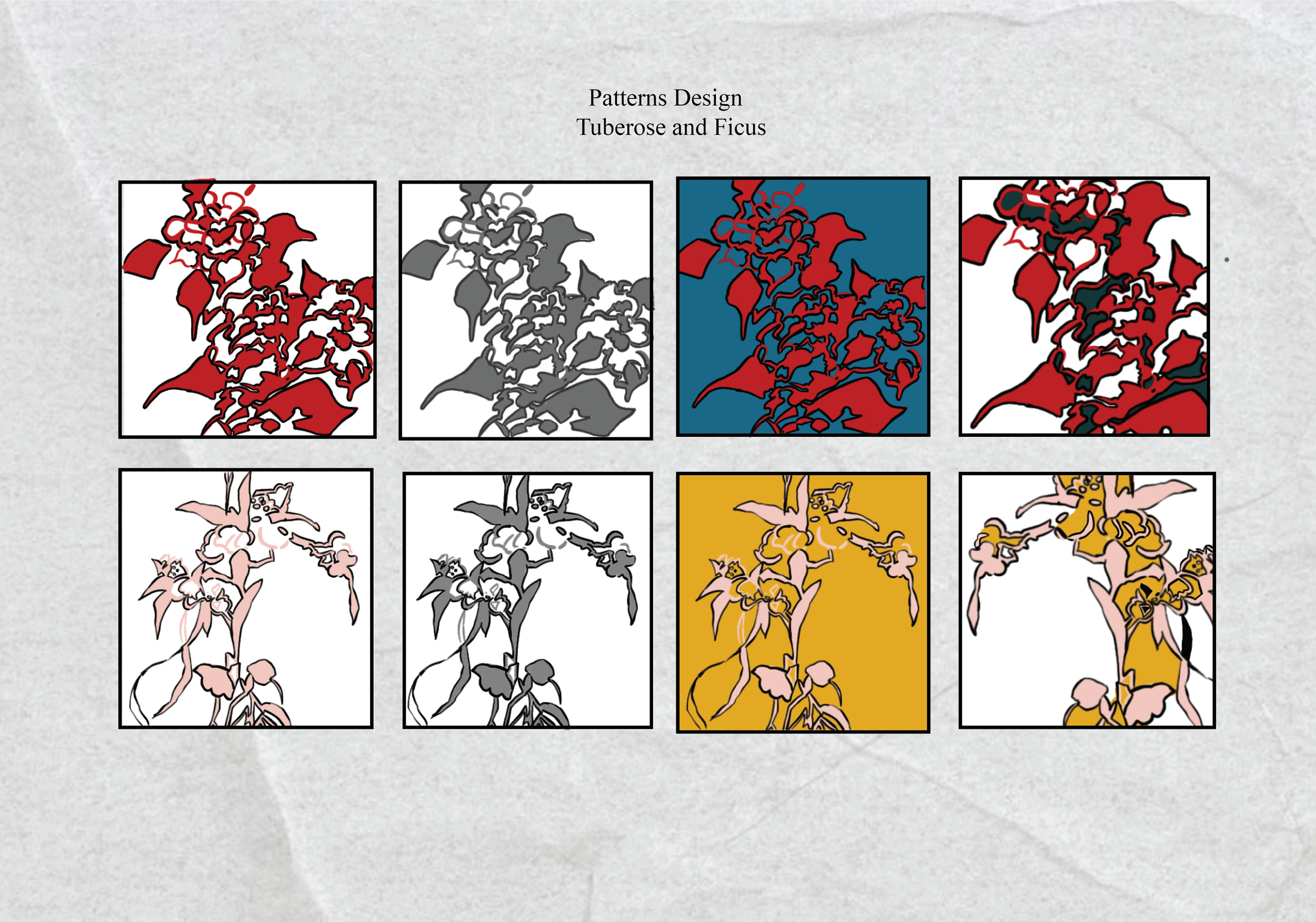
One of the main inspirations behind my patterns was Teresa Teng, an iconic figure whose influence in Hong Kong went far beyond her music to include her fashion, which helped shape the aesthetics of the era. Teng’s elegant and simple style became a symbol of femininity and sophistication, inspiring many women in Hong Kong. She brought a new sense of romance, elegance, and independence, which defined the modern ideal of womanhood. In my designs, I drew from a floral qipao that Teng wore during her performances. I incorporated motifs like tuberose and ficus, which were mentioned in the poem, and used the color palette from my storyboard. These choices aim to reflect the grace that Teng embodied, linking her legacy with my creative vision.
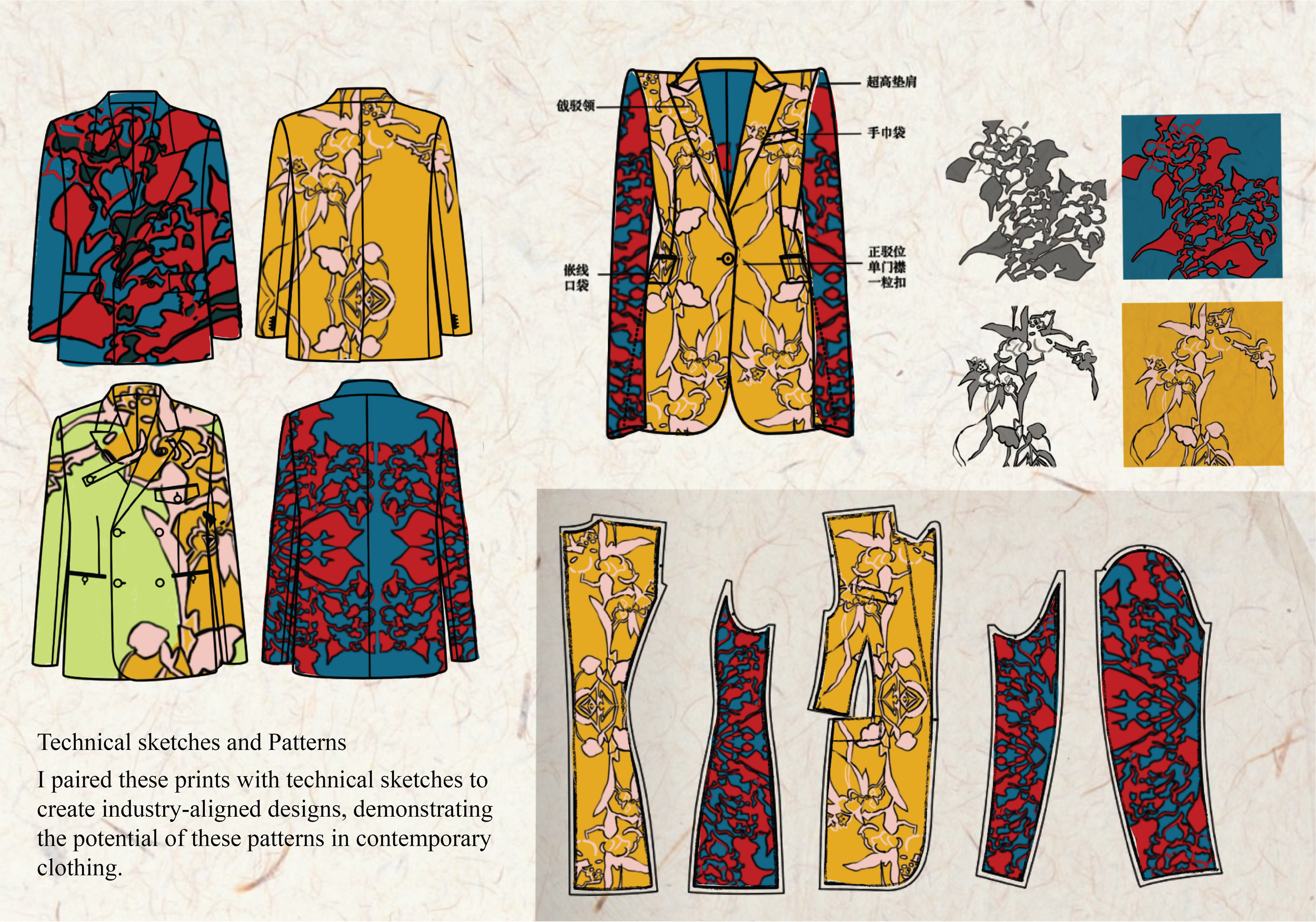
In the second collage, I combined these prints with technical sketches, designing fashion pieces that meet industry standards. This combination showcased how these prints could work in contemporary clothing design. It also met the industrial criteria outlined in the portfolio: the prints I created are suitable for factory production and can be applied to suit silhouettes, making them professional and practical.
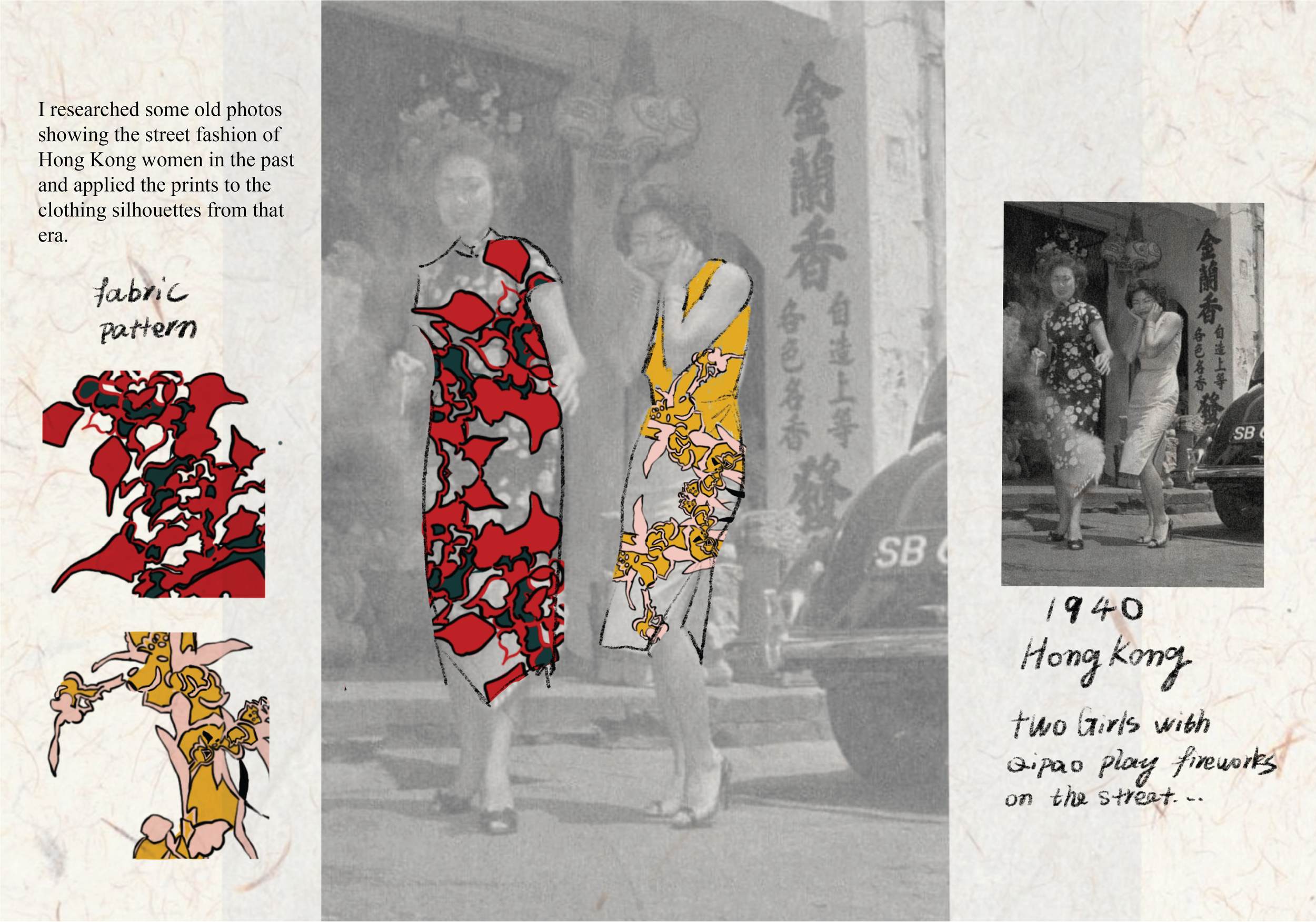
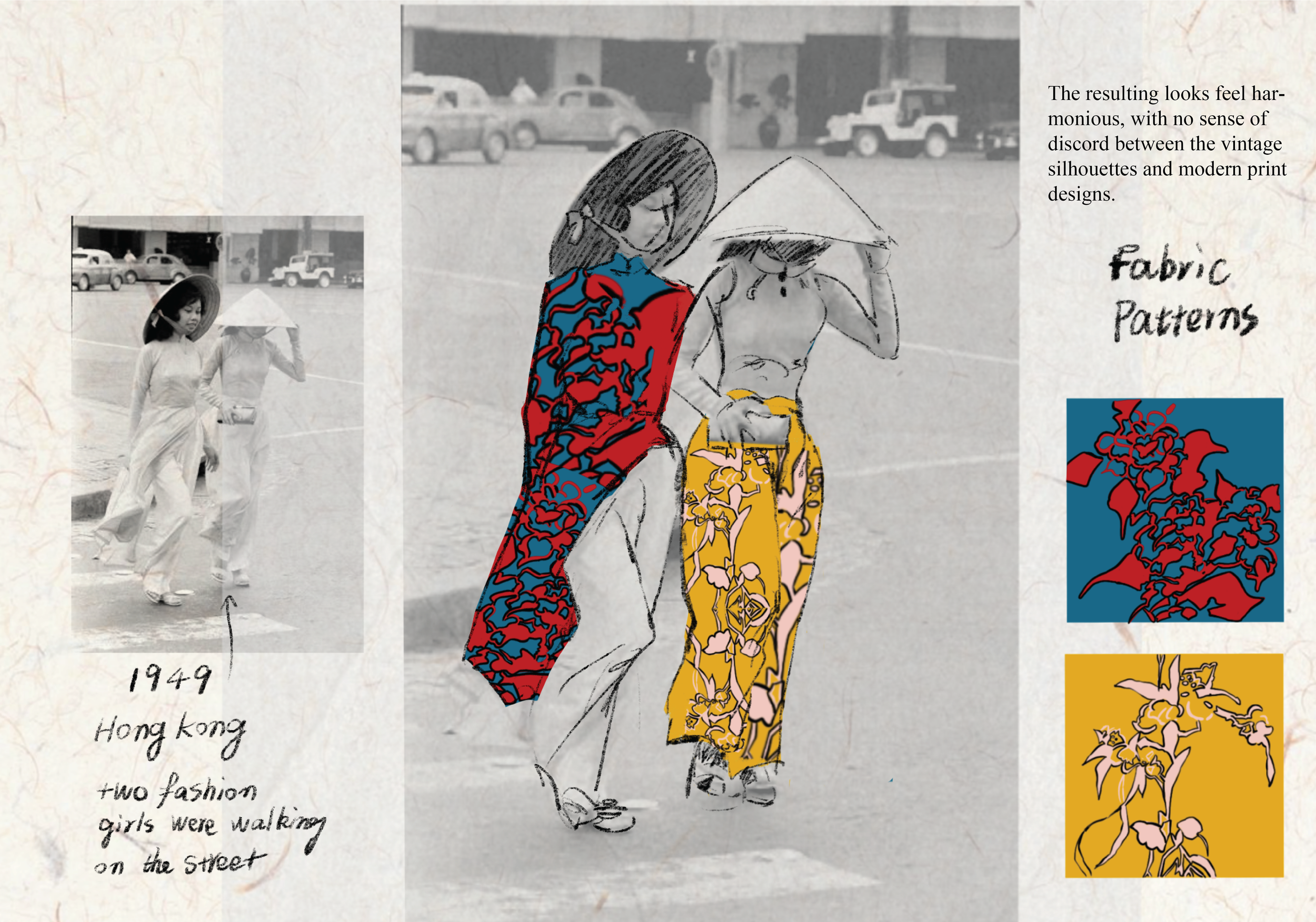
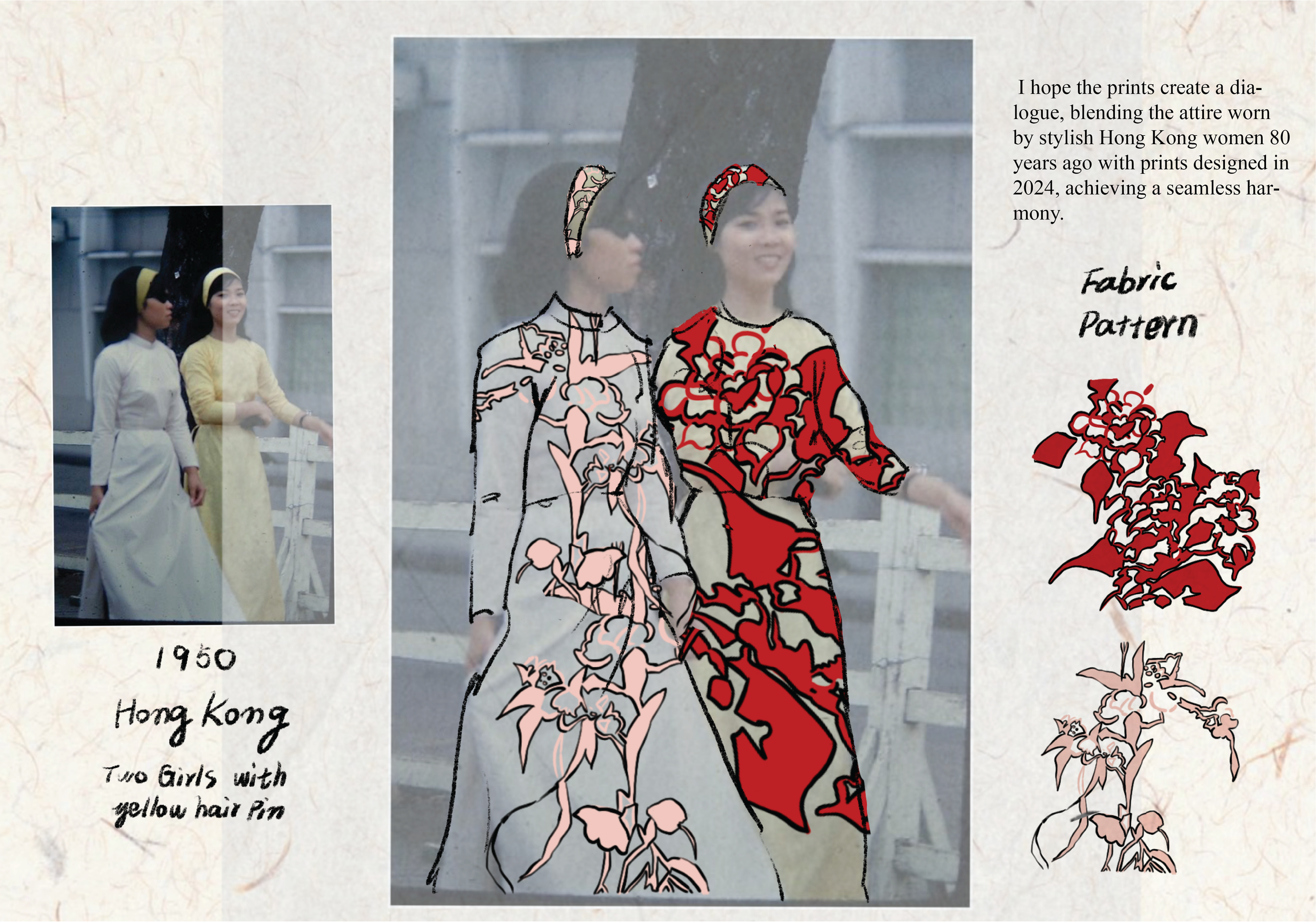
Additionally, I explored vintage photographs of Hong Kong street fashion, particularly the styles worn by women in the past. By overlaying my prints on these retro silhouettes, I created a connection between different time periods. This approach bridges the classic elegance of Hong Kong’s past fashion with modern aesthetics. Inspired by Huen and Chow’s idea of “curatorial poetics,” I aimed to present Hong Kong as a “montage of images,” offering a unified yet diverse representation of both past and present (Huen and Chow 42).
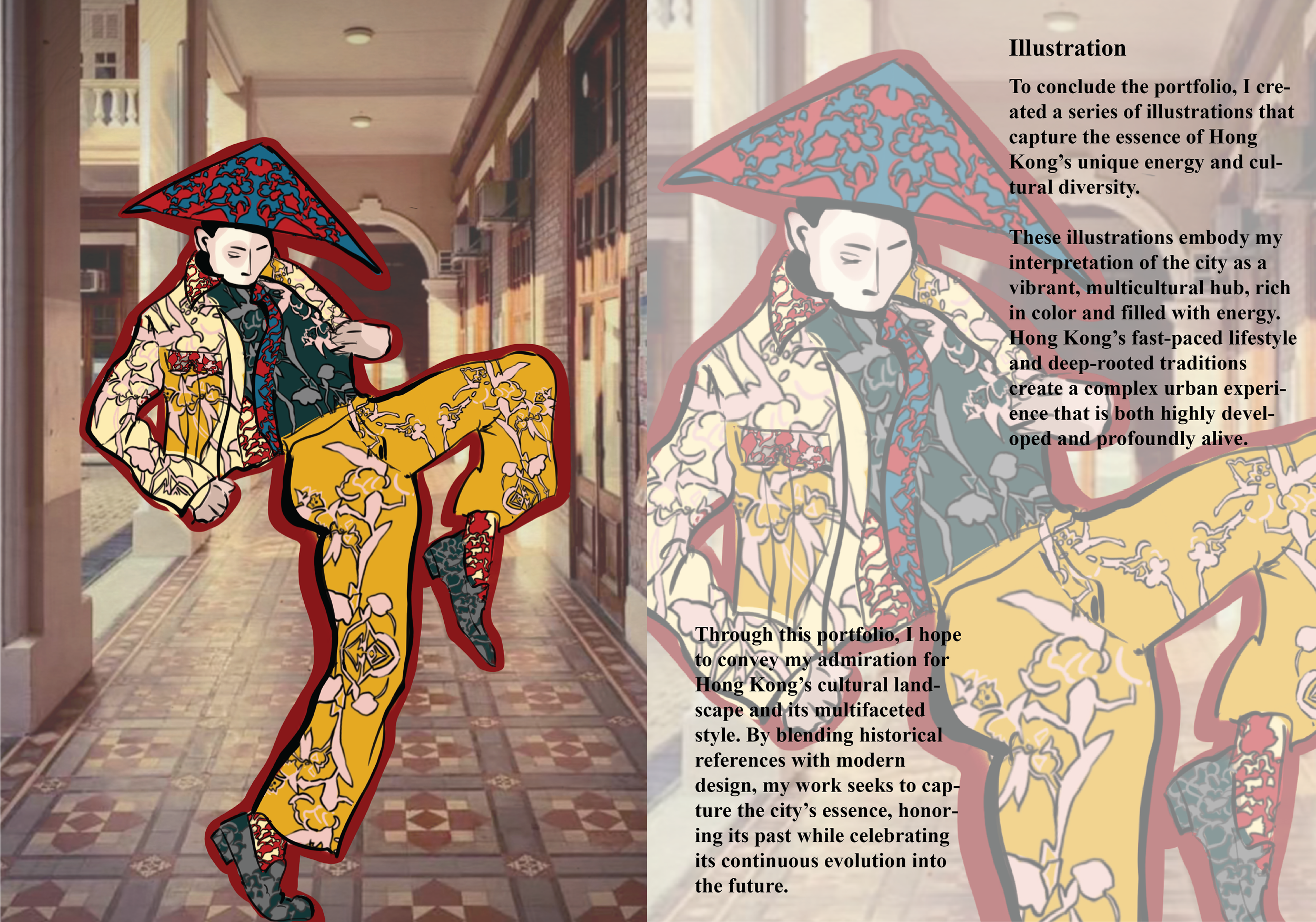
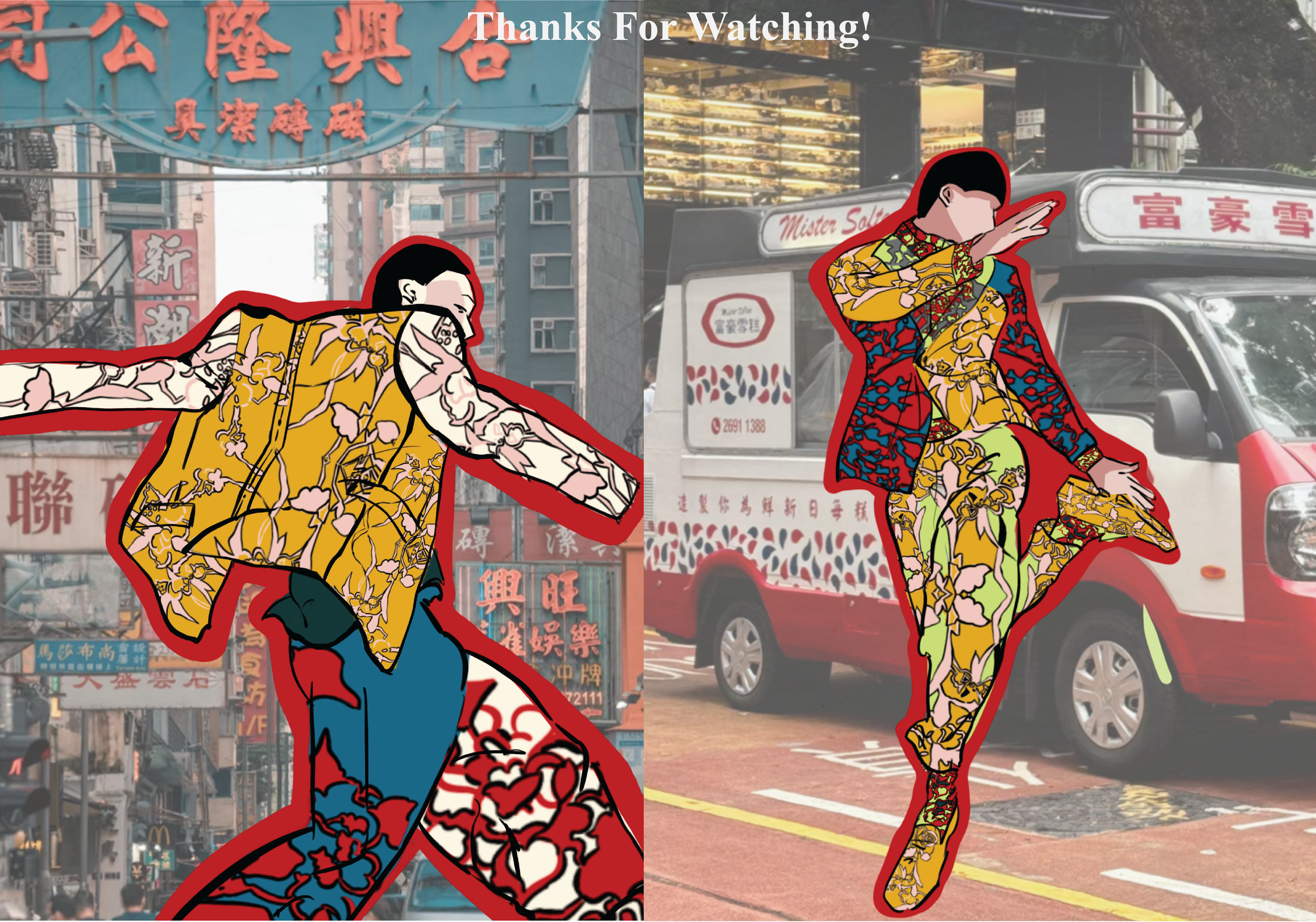
To conclude the portfolio, I produced a series of illustrations capturing Hong Kong’s cultural richness. In these final images, three figures in simple yet expressive poses are dressed in minimal silhouettes and set against iconic backdrops: bustling streets, the main building of the University of Hong Kong, and the Regal ice cream stand. Each figure strikes a dynamic pose, representing Hong Kong’s vibrant identity. These illustrations represent my interpretation of the city as a multicultural hub filled with color, life, and energy, reflecting both the fast-paced urbanity and the depth of its cultural traditions.